Seamlessly connected

The Linde success story
The success story of Linde
Top-level communication
Global production chains, geographical dispersion and hybrid working models pose major challenges for industrial companies. How can employees around the world be reliably connected, communication channels simplified and the highest security and compliance standards guaranteed at the same time? Traditional telephone systems quickly reach their limits here. The success story of Linde, which we present here, shows how things can be improved.
Cloud telephony offers us numerous advantages – for example, quick and easy scalability.

René Eskandar – Head of IT Service Management for the Western Europe region at Linde
The Challenge
Global cooperation requires smart solutions
Linde Gas has locations in more than 80 countries worldwide. It also has a large number of subsidiaries and sister companies. Communication between its employees plays a crucial role for Linde. To this end, the company provides a complete portfolio of digital communication tools, such as the collaboration and conferencing tool Microsoft Teams.
Linde fully supports mobile and remote working in order to offer young talent in particular an attractive and modern working environment. In this context, optimal telephone accessibility is also of great importance. Providing this at all locations, especially smaller branches, proved to be very costly.
As Linde attaches great importance to advanced solutions, the company decided to switch from a traditional on-premises telephone system to a cloud-based solution at several European locations. The aim was also to reduce the number of traditional desk phones and integrate telephony more closely into digital communication. After extensive testing, Linde decided to go with the Vodafone Business UC solution with RingCentral.
Growth Market Unified Communications
The Company
World leader in industrial gases
Linde is a world-leading industrial gases and engineering company with sales of US$33 billion in 2024. The company serves a wide range of end markets, including the chemical, food, beverage, electronics, metal and mining industries, energy producers, healthcare and the manufacturing sector. Linde gases and technologies are used in countless applications, ranging from the production of clean hydrogen and carbon dioxide capture, which are important for the energy transition, to life-saving oxygen and high-purity and specialty gases for electronic components. In addition, Linde offers its customers state-of-the-art gas processing applications to support their growth, efficiency improvements and emission reductions.
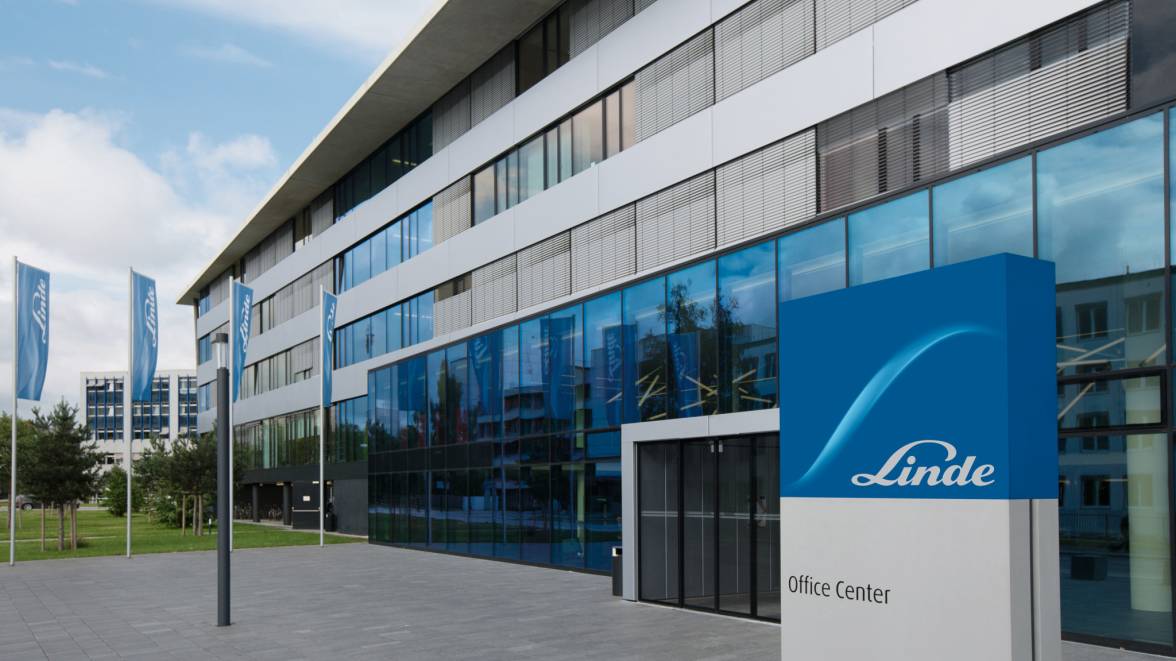
Global excellence: Linde is a leader in industrial gases and engineering, with a focus on innovative solutions for energy, health and industry.
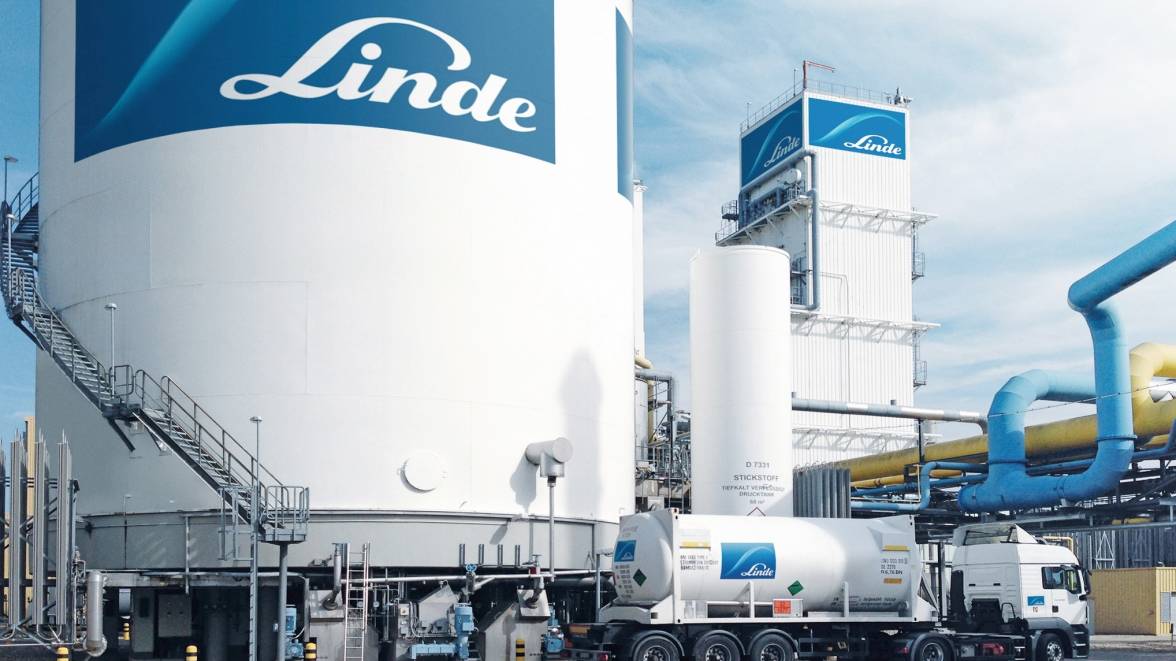
Linde's offerings range from the production of clean hydrogen to life-saving oxygen and high-purity specialty gases for electronic components.

To efficiently connect its employees and teams worldwide, Linde relies on the Vodafone Business UC solution with RingCentral.

The Solution
More flexibility, transparency and convenience with cloud telephony
Linde utilises RingCentral's close integration with Microsoft Teams. The company uses the cloud telephone system's "embedded dialer" to dial numbers. The migration took place in stages: it was completed in Germany and France at the beginning of 2025, while it was still ongoing in Switzerland and the Netherlands; Portugal and Spain followed.
"When it comes to the specific technical design of a workstation, we respond to the wishes and preferences of our employees," reports René Eskandar, Head of IT Service Management for the Western Europe region at Linde. "Many are very satisfied with the dialler integration in Microsoft Teams and then make calls using a headset. However, those who prefer a classic desktop phone or a cordless phone can also have these devices if they wish." It has also proven useful to familiarise employees with the user interface and the available functions in on-site training courses.
Internal telephone calls between our locations are free of charge, even between different countries.
René Eskandar – Head of IT Service Management for the Western Europe region at Linde
"Overall, cloud telephony offers us a number of advantages," adds René Eskandar. "First and foremost is its quick and easy scalability. The solution also proves its worth in terms of costs. For example, internal calls between our locations are free of charge, even between different countries." In addition, RingCentral provides comprehensive transparency regarding actual usage.
The IT department also benefits from the solution's ease of administration and integration with a wide range of third-party applications such as CRM and ERP systems. "What's more, all communication channels can be integrated," says René Eskandar, "from hand scanners in the warehouse to fax machines, if these are still required for certain ordering processes."
Another major advantage is that the solution meets all compliance requirements, such as those stipulated by the GDPR or national data protection regulations.
Linde has a strong partnership with Vodafone Business. "We appreciate the open communication and the opportunity to access the expertise of this digitalisation partner," summarises René Eskandar. "Working with Vodafone Business is simply a pleasure."
Flexible communication with RingCentral
The Advantages
Flexible communication with RingCentral
Linde has implemented the cloud-based communication solution RingCentral at all its locations in Germany and France. Roll-out is underway or imminent in other countries. Linde employees benefit from the solution's tight integration with Microsoft Teams and other applications such as CRM and ERP. The company's IT department saves time and effort thanks to the solution's simple administration and high degree of automation when linking to other systems.

Better scalability
for the coverage of new locations

Improved networked communication
thanks to comprehensive Microsoft Teams integration

Fulfilment of all compliance guidelines
such as GDPR or national data protection regulations

Everything from a single source:
Vodafone takes care of setup, maintenance and integration into the mobile network.
5 questions for René Eskandar

5 questions for René Eskandar
"Everyone is thrilled by the seamless integration."
As Head of IT Service Management for the Western Europe region at Linde, René Eskandar is also responsible for the implementation and integration of the cloud-based RingCentral telephone system. We spoke to him about the advantages of the solution and the collaboration with Vodafone Business.
What were the decisive factors in your decision to implement a cloud-based telephone system?
René Eskandar: Telephony remains a central and important communication channel, both internally for coordination between colleagues and externally for contact with customers and business partners. It becomes even more powerful when linked to other digital media such as collaboration and conferencing from Microsoft Teams. The relevance of this solution for our business is also demonstrated by the fact that we have booked around 3,500 user licences for Vodafone Business's virtual telephone system across the company.
How are the workstations designed for users?
René Eskandar: The standard option is a dialler integrated into Microsoft Teams. Calls are then made using a headset, either wired or wireless, depending on the workplace and preference. However, those who expressly wish to do so can also use a desk phone or a digital cordless phone.
The cost savings are considerable.
René Eskandar – Head of IT Service Management for the Western Europe region at Linde
How has the RingCentral solution impacted costs?
René Eskandar: There are several levels at which we are saving money. This starts with the actual telephone costs, which are reduced by flat rates and free internal calls, even between Linde sites in different countries. It also continues with savings in administration and maintenance. And last but not least, there have been significant cost reductions on the hardware side – for example, through the use of digital cordless telecommunication system (DECT) repeaters, which we no longer need.
What experiences have you and your colleagues had with RingCentral since its introduction?
René Eskandar: Practically everyone is enthusiastic about its ease of use and seamless integration with Microsoft Teams. Added to this is its close integration with other applications such as CRM, ERP and Salesforce. This benefits employees, but also us in the IT department, because onboarding and offboarding are largely automatic.
How would you rate your collaboration with Vodafone?
René Eskandar: Linde has a strong partnership with Vodafone Business. We appreciate the open communication and the opportunity to access the expertise of this digitalisation partner. We simply enjoy working together.
These 4 trends are shaping the workplace
Transforming unified communications

Transforming unified communications
These 4 trends are shaping the workplace
Communication is the backbone of modern businesses, but it is also becoming increasingly complex. Unified communications (UC) offer the opportunity to manage established infrastructures transparently and efficiently while ensuring flexibility and security. Voice, video and messaging services are bundled on a single platform, making work processes faster, more efficient and more secure. UC solutions are currently being strongly influenced by innovative technologies and trends – here we present four of the most important ones that will influence our everyday working lives in the coming years.

1. Further advances in generative AI
Generative artificial intelligence is becoming increasingly central to UC solutions. It helps with the automatic drafting of emails and messages, translations, transcribing and summarising meetings, and even analysing internal data. AI assistants based on company-owned knowledge databases are being integrated to provide employees with information more quickly.

2. Increasing migration to the cloud
More and more companies are fundamentally shifting their communications infrastructure to the cloud (United Communications as a Service: UCaaS). Reasons for this include lower overall costs, better scalability, simpler security and compliance, coupled with the ability to deploy innovations almost immediately. The shutdown of analogue telephone networks in numerous countries is also reinforcing this trend.

3. UCaaS integration with contact centres
The combination of unified communications services with contact centre functions is becoming increasingly important: when PBX/UC and contact centres come from a single source, the result is a more efficient onboarding and migration structure, better performance and less friction in customer service. Integrated platforms make it easier to provide employees and experts with rapid support when needed.

4. Greater focus on security and compliance
Remote and hybrid working bring with them increased security risks, such as attacks via APIs, voice impersonation, etc. At the same time, many countries are expanding and tightening their data protection laws. Companies, especially small and medium-sized ones, must therefore choose secure UCaaS providers that comply with strict compliance guidelines (e.g. GDPR) and are also equipped to deal with transparency and recovery after security incidents.
Conclusion
Unified communications is no longer a nice-to-have, but a central component of a future-proof work culture. Companies benefit from efficiency, transparency and better networking among their employees. Vodafone Business offers you a selection of modern, cloud-based telephony solutions – individually tailored to your requirements. Get free advice now!