The cloud as a success factor in logistics

The PVS Europe success story
The success story of PVS Europe
Flexible, scalable logistics services thanks to the cloud
Whether clothing, technology or unusual Christmas gifts – one in eight Germans now buys online. For the logistics sector, this development is both an opportunity and a challenge. Reliable communication infrastructures and a well thought-out digitalisation strategy are essential. The example of PVS Europe shows how cloud solutions can support this.

The Challenge
Digitalisation for efficient fulfilment
The fulfilment business requires comprehensive digitalisation. This begins with warehousing and stocktaking, continues with order management and order picking and extends to payment processing, customer service, the booking of bonus points and the processing of returns. PVS Europe's activities are also labour-intensive, while the company – like many other industries – is faced with a shortage of skilled workers and rising personnel costs. Another aspect: legal regulations – such as the handling of customer data in accordance with the GDPR – must be observed throughout the supply and logistics chain.
Having seven branches in Germany and a total of 15 across Europe, the company therefore needs a reliable solution to network its locations – as well as a stable and equally reliable basis for its IT applications in terms of IT security. Furthermore, in the logistics business, various end devices, such as MDE systems (mobile data capture), must be supported and networked. To meet these challenges, PVS connects its sites via MPLS and uses Microsoft Azure and Microsoft 365. PVS obtains all of these components from Vodafone Business – as a completely integrated, fully managed solution.
Online purchases on the rise
The Company
International logistics expert
PVS was founded in 1979 as "Presse Versand Service". Today, the company has redefined its name as "Premium Versand Services". PVS offers the entire range of fulfilment services in e-business – from warehousing and goods dispatch to returns processing. It also offers services in the areas of customer service, marketplace business and performance marketing. PVS Europe provides fulfilment services for more than 100 clients from the fashion, beauty, healthcare, outdoor & sports, home & living, publishing, merchandising and customer club sectors.
The company has a turnover of around 500 million euros and over ten million product shipments per year. Today, PVS Europe has 15 locations in Germany, Italy, Austria and Switzerland. The head office is located in Neckarsulm, Baden-Württemberg.

PVS is now one of the leading owner-managed e-commerce fulfillment companies in Europe.

Impressive: Six million product shipments are processed annually across a logistics area of 130,000 square meters.

E-commerce presents both opportunities and challenges for logistics – strong connectivity is essential.

Central applications and reliable data are essential for PVS Europe’s fulfillment business.
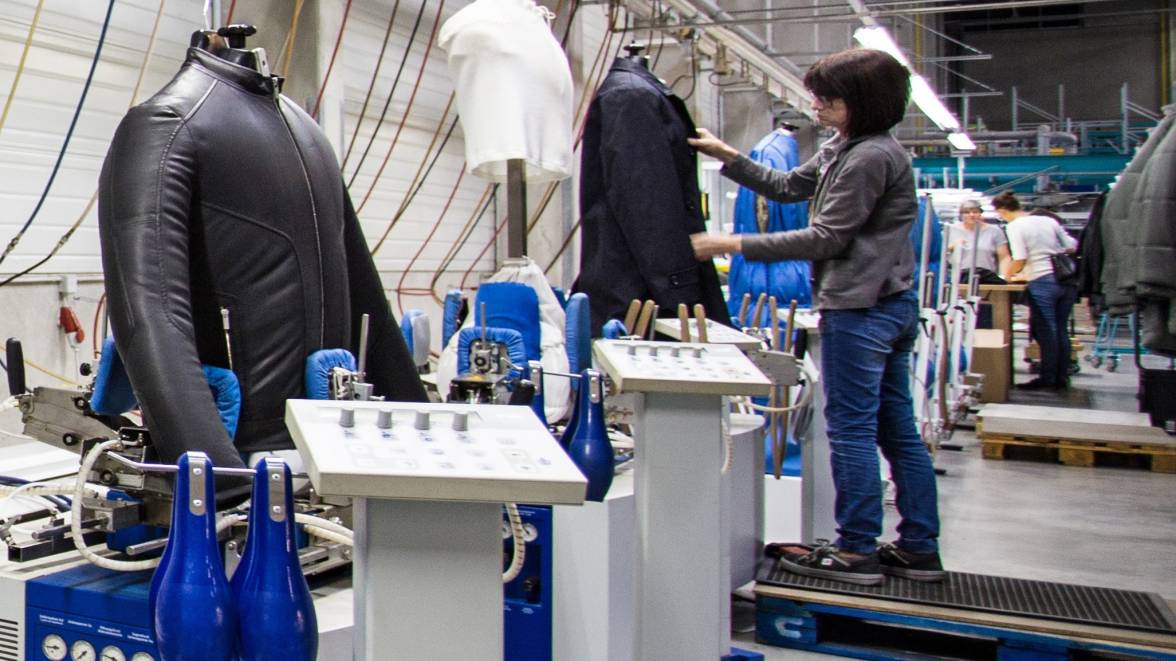
Digitalising logistics processes enables noticeable optimisation of resources and workflows.
The Solution
Maximal flexibility and scalability thanks to cloud solutions
A reliable and high-performance connection of the sites is essential for the company's cloud strategy. PVS Europe has networked its sites via MPLS (Multiprotocol Label Switching) from Vodafone Business. The connection is mainly made via fibre optic cables. The company also uses LTE/5G mobile communications in some of its external warehouses and new sites. Vodafone additionally provides a connection with maximum availability at all locations. The solution comprises two hardware components. If one of the two routers fails, the other takes over automatically. This redundancy concept minimises the risk of failures and increases reliability and stability, which is extremely important for PVS's business. At locations with a fixed network connection, mobile telephony provides additional redundancy.
For Office applications, PVS relies on Microsoft 365, which the company licences through Vodafone Business. To back up application and communication data, PVS has upgraded its Microsoft 365 licence with the cloud backup offered by Vodafone. The solution ensures the reliable backup and recovery of data, guaranteeing business continuity and data security. PVS employees also use other applications such as order management and warehouse administration in the cloud. The basis for this is Microsoft Azure, which is also provided by Vodafone Business. The secure connection of the Vodafone network to the Azure infrastructure has been certified by the BSI (German Federal Office for Information Security), among others.
The fact that the entire solution package comes from a single source is a major efficiency advantage.

Jürgen Blannarsch – Managing director and partner, PVS Europe
"The fact that the entire solution package comes from a single source and that we have a central point of contact is a major efficiency advantage," reports Jürgen Blannarsch, Managing Director and shareholder of PVS Europe. "In addition, we were able to significantly reduce our investment in hardware and ensure that we are always at the cutting edge of technology with the solution from Vodafone Business."
Andreas Wößner, Team Leader IT System Administration at PVS, adds: "Vodafone Business takes care of administration, maintenance and updates. Microsoft Azure also fulfils the high security requirements of our business and our customers – for example when handling payment data." In addition, the booked system performance can be scaled flexibly and without long run-up times – which is particularly important since fulfilment tends to be a seasonal business, for example before Christmas or on Black Friday.
"The solutions from Vodafone Business secure our ability to work, give us a competitive edge and contribute to customer satisfaction," summarises Managing Director Jürgen Blannarsch, adding: "We have a long-standing partnership with Vodafone – the cooperation is always close and based on trust." The two companies are therefore already discussing how the collaboration can be further expanded in the future. For example, they are currently looking into switching the telephone system from PVS to a cloud-based solution from Vodafone Business.
Securely connect employees with applications
The Advantages
Applications and data securely in the cloud
PVS Europe uses MPLS, managed by Vodafone Business, to network its sites. Microsoft 365 with cloud backup is used to utilise Office applications and to back up application and communication data. The company relies on Microsoft Azure as the basis for other applications such as order management and warehouse management. In this way, Vodafone Business helps to ensure PVS Europe's ability to work at all times.

Everything from a single source:
Vodafone manages operations, security and backups.

Flexible scalability:
Capacities can be quickly adapted.

Maximum security:
Microsoft-certified IT and data security.

Noticeably less IT effort:
Vodafone takes over operation and maintenance.
5 questions for Blannarsch and Wößner

5 questions for Jürgen Blannarsch and Andreas Wößner
"The cloud offers us many advantages."
Jürgen Blannarsch is Managing Director and Partner at PVS Europe, while Andreas Wößner is responsible for IT system administration. In this interview, they discuss the opportunities of a cloud-based IT infrastructure and the central role of digitalization within the company.
What role does digitalisation play in your company?
Jürgen Blannarsch: Without digitalised processes and reliable, anytime access to data and applications, our business would not be possible. From order management and inventory control to picking, customer service, and returns management, everything depends on having access to up-to-date data.
Why did you migrate the infrastructure for these digital processes and applications to the cloud?
Andreas Wößner: The cloud offers us many advantages. We can leave administration, maintenance, and updates to the experts at Vodafone and are always up to date with the latest technology. Additionally, we can scale the resources we use as needed and without long lead times – which is hugely important for our seasonal business.
Vodafone understands our requirements, and the cooperation is always based on equal footing.
Jürgen Blannarsch – Managing director and partner, PVS Europe
What specific consequences would arise if data and applications were not reliably accessible?
Jürgen Blannarsch: Our business would come to a standstill. Smooth operations are extremely important to us and a key factor for our customers. Major clients conduct regular audits to ensure that all requirements are met and processes run smoothly. Alongside client satisfaction, the satisfaction of end customers is also very important to us and the companies we work for.
What importance does IT security have in this context?
Andreas Wößner: IT security plays a central role. We work with sensitive customer data, including payment information, which is subject to strict protection and security requirements. Microsoft Azure and Vodafone’s MPLS network provide the foundation to ensure and maintain this security.
In daily practice, it pays off that we receive seamless solutions from one source.

Andreas Wößner – Team Leader IT System Administration, PVS Europe.
How do you assess the collaboration with Vodafone Business during the implementation?
Jürgen Blannarsch: We have a long-standing partnership. My impression is that Vodafone understands our requirements and that the collaboration is always conducted on an equal footing.
Andreas Wößner: In daily operations, it proves advantageous that we obtain integrated solutions from a single source and have a central point of contact for all aspects and components. This brings significant efficiency gains to our day-to-day business.
How e-commerce is transforming logistics

Opportunities and challenges of digitalisation
How e-commerce is transforming logistics
E-commerce has fundamentally changed customer expectations. Fast delivery times, flexible services, and full transparency along the supply chain are now standard. For logistics, this means more speed, more flexibility – and significantly higher demands on processes, infrastructure, and IT. Keeping pace requires consistent digitalisation.
Evolving requirements in logistics
Just a few years ago, delivery times of several days were widely accepted. Today, end customers often expect next-day delivery – or even faster. Added to this are changing delivery locations, real-time tracking information, and hassle-free returns management. Businesses in the B2B sector are also increasingly demanding transparency, reliability, and integration with their own systems.
These expectations can hardly be met with traditional, manual logistics processes. To remain competitive, companies must digitalise, automate, and intelligently connect their operations.
Five strategic priorities for sustainable e-commerce logistics

Real-time transparency across the supply chain
Customers want to know where their goods are at all times. This requires IoT-based tracking solutions that capture not only locations but also conditions such as temperature, humidity, or vibrations – especially crucial in sensitive sectors like pharmaceuticals or food.

Scalable IT infrastructure
E-commerce is highly seasonal. Large fluctuations in order volumes regularly challenge IT and infrastructure. Cloud-based systems enable flexible resource scaling – without lead times or investments in additional hardware.

Automation in warehousing and shipping
Modern warehouse management systems (WMS) increasingly control processes automatically – from storage and picking to shipping. This boosts efficiency, reduces errors, and enables faster handling of large order volumes.

Data-driven decisions
Valuable data is generated throughout the entire supply chain – covering orders, delivery times, returns, and capacity utilization. Those who analyse this data effectively can identify bottlenecks early, optimise processes, and improve customer satisfaction.

Security and compliance
As digitalisation increases, so do the demands on IT security. Protecting sensitive customer data, complying with data protection regulations (e.g. GDPR), and safeguarding against cyberattacks are now fundamental requirements for stable and trustworthy supply chains.
Digitalisation as the key to competitiveness
E-commerce is changing the rules of the game in logistics. Companies that embrace digital technologies can not only deliver faster and more efficiently but also respond better to customer needs, minimise risks, and realise new business models.
An experienced partner like Vodafone Business helps companies future-proof their logistics processes through scalable connectivity, cloud infrastructures, IoT solutions, and security architectures – especially in a dynamic market environment where digitalisation becomes a strategic core competency.