Hospitality redefined

Digitalisation in the hotel industry
The Hospitality X success story
The Hospitality X success story
Digitalisation drives innovation in the hotel industry
Digital technologies are fundamentally changing the hotel industry: from contactless check-in to personalised guest communication, new standards are emerging. Investing in smart processes today will secure competitive advantages tomorrow. The young Düsseldorf-based company Hospitality X provides an example of this.
Compared to other premium hotels of this size, The Zipper operates with only about a quarter of the staff.

Otto Konstantin Lindner – Founder and Managing Director, Hospitality X
The Challenge
Innovation in a highly competitive industry
The hospitality market is highly competitive and faces challenges such as high cost pressure and staff shortages. To differentiate oneself from the competition, new concepts and approaches are required. Hospitality X responds to this with innovative ideas and consistent digitalisation. One example is the 19-storey building "The Zipper", located on the banks of the Rhine in Düsseldorf, which was developed and is operated by the company. It contains 168 serviced apartments, which are offered for short- or long-term rental, as well as a co-working area and a large fitness and wellness area. The lower five floors house 14 specialist medical practices, offering patients the opportunity to stay in one of the apartments during treatment. Premium dining on the ground floor completes the offering.
The Zipper is operated entirely digitally: guests check in digitally before arrival and check out digitally before departure. Room keys are stored on guests' smartphones. Employees working in the building can be reached via WhatsApp or by phone. Parking in the underground car park is also billed digitally using the vehicle's registration number. As the basis for this fully digitalised operating concept, Hospitality X relies on a powerful broadband infrastructure. This is provided by Connected Business from Vodafone.
Good connectivity is essential
The Company
Future-focused Startup
Hospitality X was founded in 2022 by Otto Konstantin Lindner and Tobias Sebastian Oberdieck. The company has set itself the goal of linking hospitality – i.e. the operation of hotels, apartments and other properties for accommodating and catering to guests – with other future-oriented industries, such as healthcare and digitalisation. To this end, Hospitality X repositions existing hotels and then operates them itself. To this end, the company develops innovative and individual hotel, mobility and digitalisation concepts. Hospitality X is growing steadily and currently operates seven hotels – including the "The Zipper" project in Düsseldorf, the Park-Hotel at Hamburg's Hagenbeck Zoo, the Hotel Vier Jahreszeiten at Schluchsee in the Black Forest, and other sports, holiday and conference hotels.
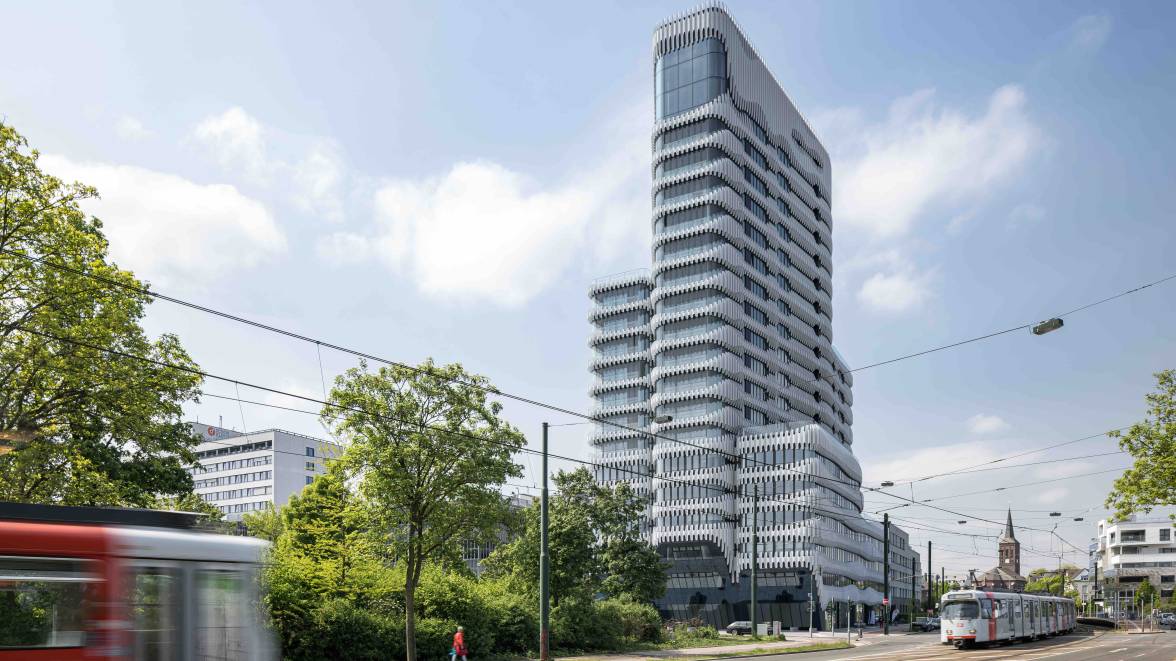
Landmark on the Rhine: The striking building known as "The Zipper" was constructed between 2013 and 2022 based on designs by Berlin-based architectural firm J. MAYER H.
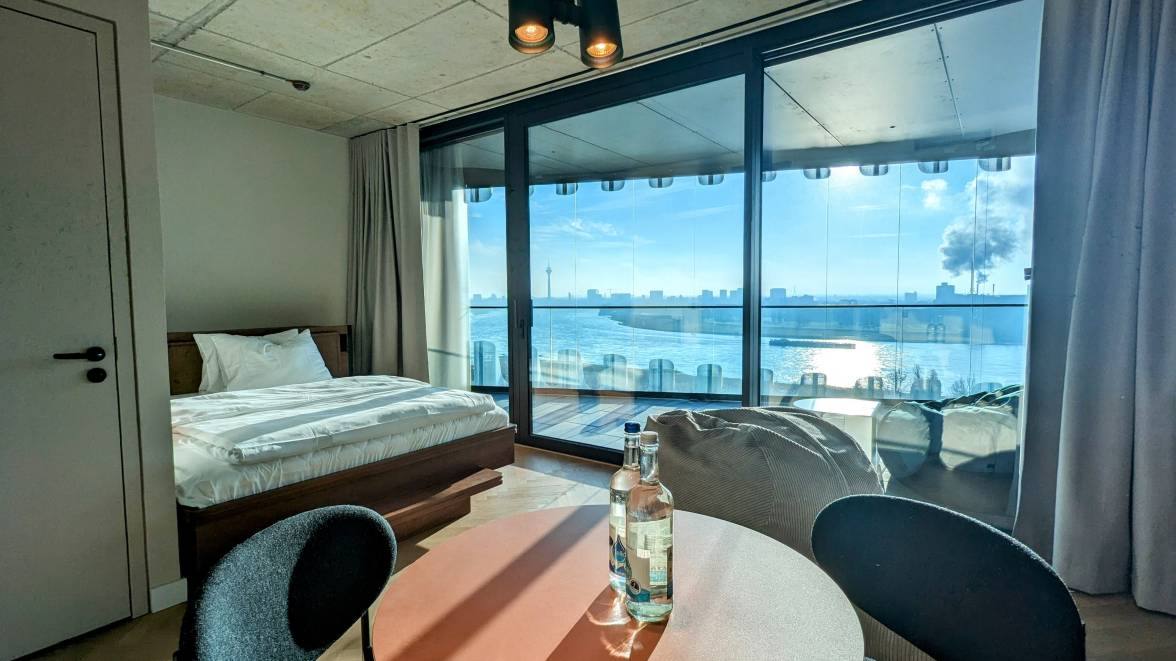
Bright prospects: Hospitality X operates the futuristic building based on an innovative concept – thanks to powerful networking from Vodafone Business.
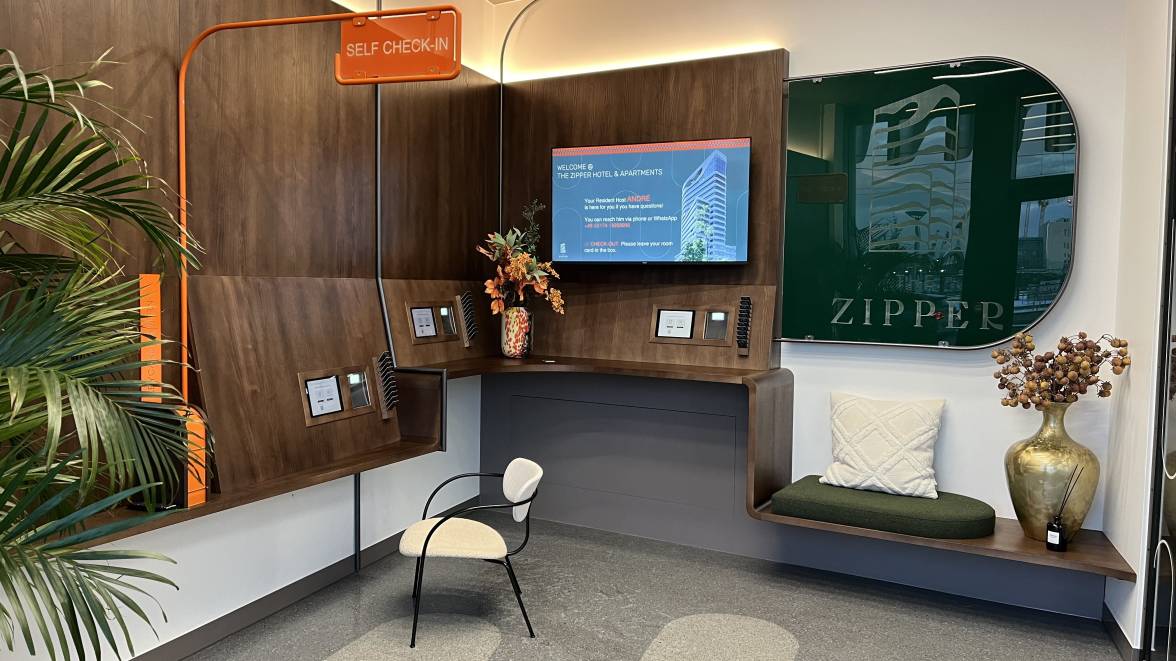
Maximum flexibility thanks to digital check-in: Guests staying at the serviced apartments at The Zipper can easily check in themselves using their smartphone.
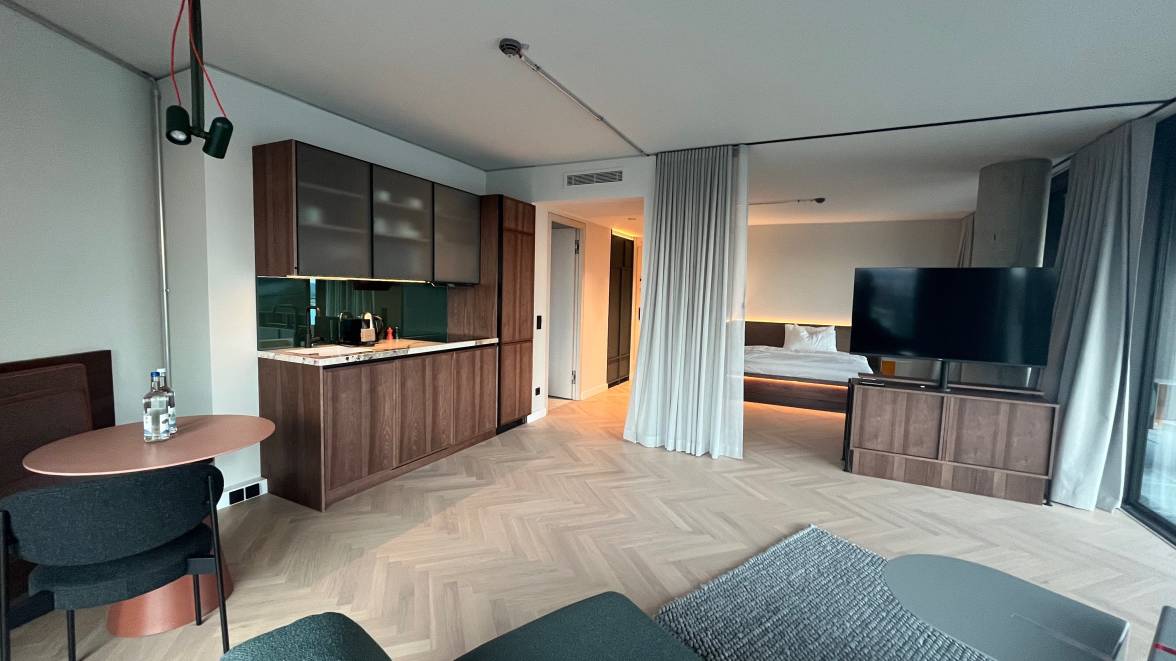
Of course, the apartments themselves are also optimally connected thanks to 10-gigabit Ethernet from Vodafone Business.
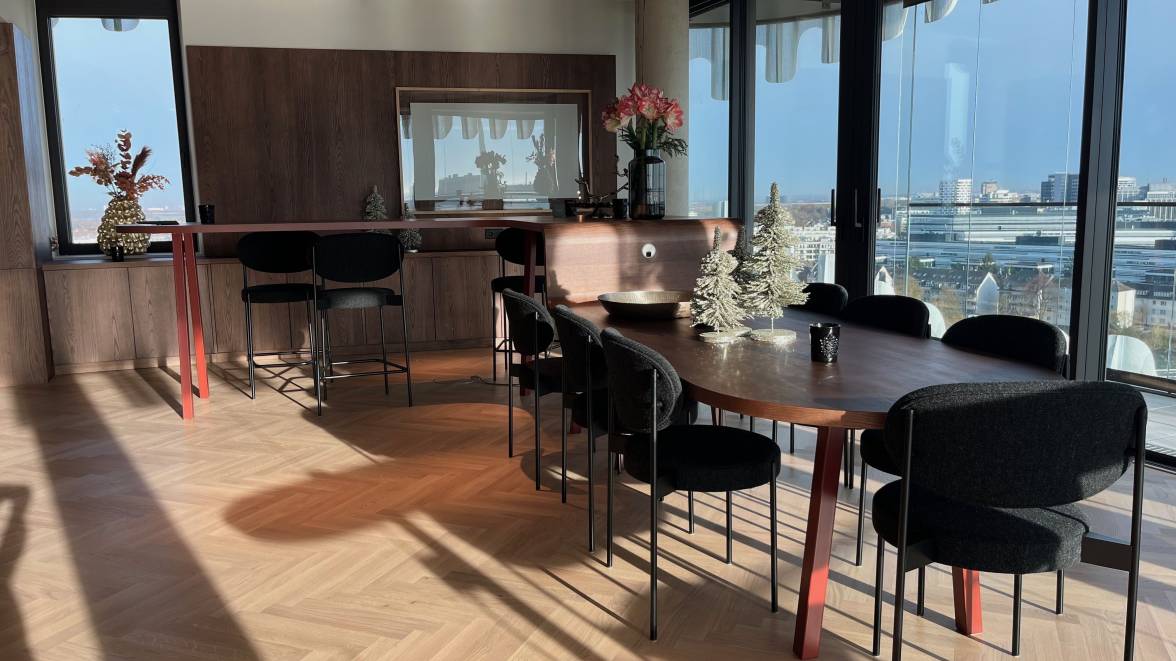
Reliable broadband connections are the foundation for business offerings such as co-working spaces, video conferencing and smooth digital collaboration.

The Solution
High-performance IT infrastructure with managed services from Vodafone
Since digital solutions are at the heart of the project, a high-performance and reliable broadband infrastructure and Internet connection are essential for The Zipper to operate. To this end, Vodafone Business completely wired the building with 10-gigabit Ethernet during the renovation phase. The apartments and communal areas are supplied by the Vodafone product Connected Business, which also provides guest and communal Wi-Fi. Cisco Meraki is responsible for its operation.
Beyond connectivity, Hospitality X has also outsourced the complete management of its digital infrastructure to Vodafone Business. The company itself does not have an IT department, but entrusts this function entirely to Vodafone Business as part of a managed service model.
"It is our basic principle that everyone focuses on what they do best," emphasises Otto Konstantin Lindner, co-founder of Hospitality X. "In our case, that is the hotel industry – for the digital infrastructure, we rely on Vodafone. And after all, this is the lifeline of our business," adds co-founder Tobias Sebastian Oberdieck.
Digitalisation not only forms the foundation of The Zipper's operations, but also helps to counteract the shortage of skilled workers:
"Compared to other premium hotels of this size, The Zipper operates with only about a quarter of the number of employees," says Otto Konstantin Lindner.
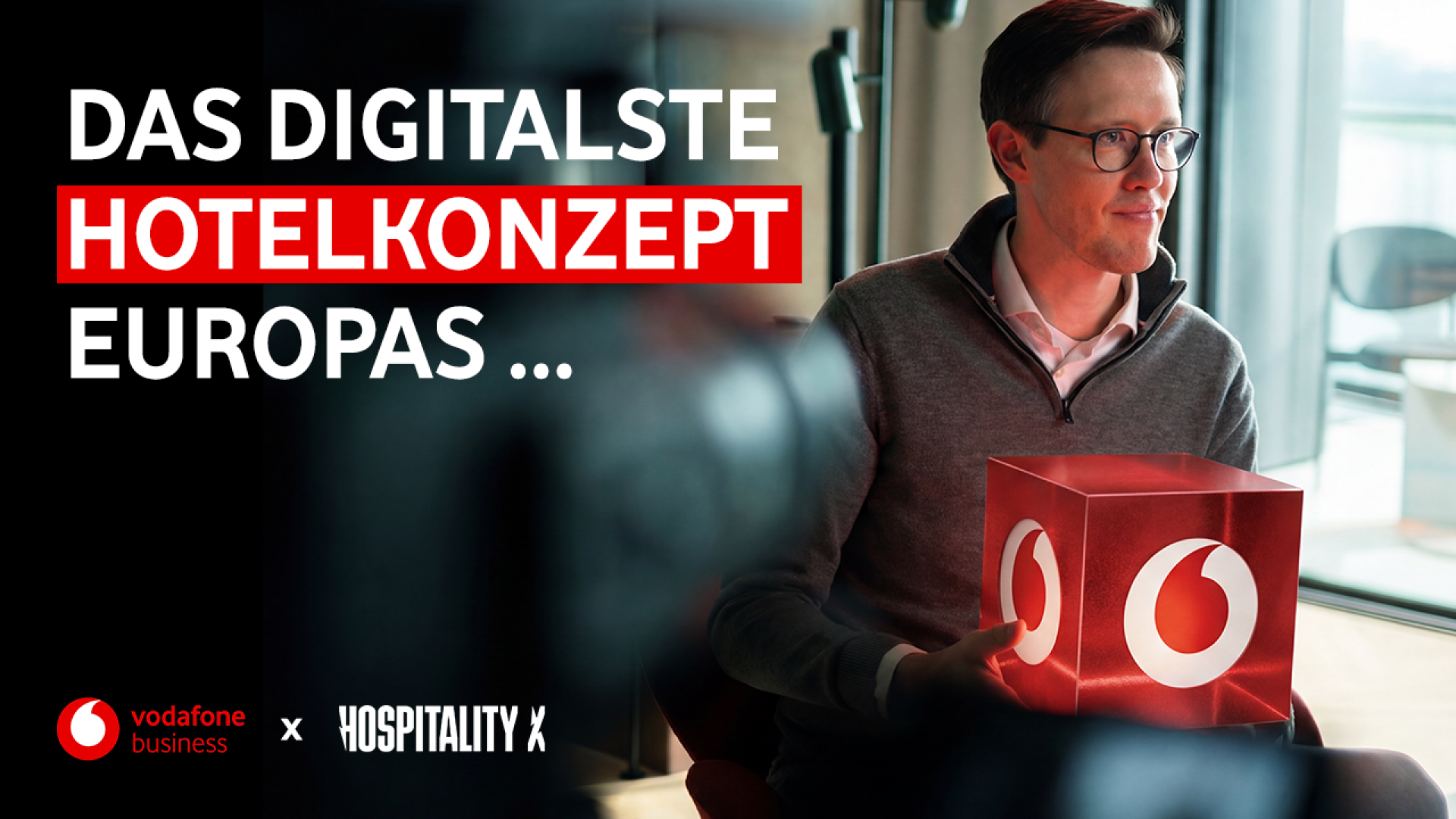
Video: Interviewformat "Out of the Box" mit den Gründern von „The Zipper“, Otto Lindner und Tobias Oberdieck. (2:52 Min.)
Despite IT outsourcing, Hospitality X keeps an eye on the entire network infrastructure at all times via the Connected Business Dashboard and can access it remotely. The performance of the access points is also visible via the dashboard.
Consistently focusing on partnerships is part of Hospitality X's business strategy. This continues in other areas: for example, a premium furniture manufacturer has developed its own sofa design for The Zipper's furnishings, and a curtain specialist has created custom curtains. As part of a collaboration with a pet supply chain, The Zipper welcomes dog owners with a welcome box and a dog basket in the apartment.
Hospitality X also works closely with the specialist medical practices in the building. For example, an ENT specialist offers outpatient sleep studies that patients can undergo in the comfortable atmosphere of their apartment. In all these cases, digitalisation and strong partnerships help to strengthen customer loyalty. "This creates individual experiences for guests and thus ensures a high level of customer satisfaction," summarises Tobias Sebastian Oberdieck.
Innovative, digitised hotel concept
The Advantages
Innovative, digitised hotel concept
The use of fully digital solutions ensures a modern and compelling customer experience, while at the same time enabling the apartment hotel to operate with a comparatively small number of employees. The solution components used include online check-in and check-out, digital room keys on smartphones, innovative collaborations such as the provision of outpatient sleep studies by an ENT practice directly in the guest's apartment – and much more.

High-performance Internet connection
as the basis for the digital business model

Optimised Wi-Fi in apartments,
co-working spaces and communal areas

Transparent network information
via a central dashboard

Operation and maintenance
outsourced to Vodafone Business
5 questions for O. Lindner and T. Oberdi
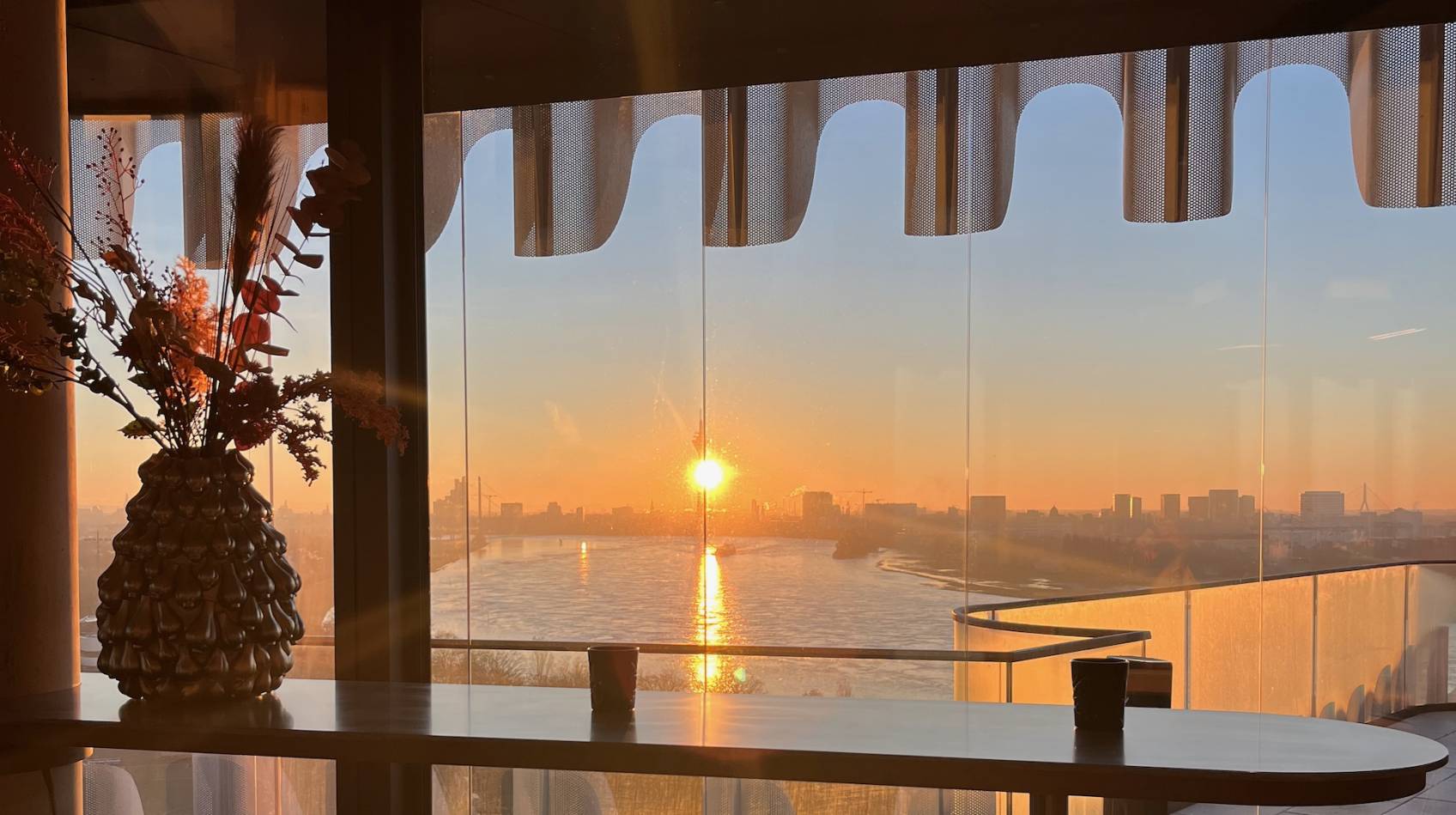
5 questions for Otto Konstantin Lindner and Tobias Sebastian Oberdieck
"Our goal is to create win-win situations"
Otto Konstantin Lindner and Tobias Sebastian Oberdieck are both founders and managing directors of Hospitality X and The Zipper Hotel & Apartments. We spoke with them about the opportunities offered by digitalisation and the importance of strong partnerships in the hotel industry.
What role does digitalisation play in your business?
Otto Konstantin Lindner: In order to differentiate yourself from your competitors in the highly competitive hospitality market, you need innovative ideas and concepts. That's why digital solutions are our absolute focus. This brings advantages for us as well as for the guest experience. For example, online check-in and check-out allow us to do without a traditional reception desk. Nevertheless, we can offer comprehensive concierge services by making our in-house hosts available to guests via WhatsApp or telephone.
What role do partnerships play in this context?
Tobias Sebastian Oberdieck: They too are at the heart of our business. Examples of this range from close cooperation with the medical practices in the building to the furnishings, for which we collaborated with Rolf Benz and Jab Anstoetz, and the welcome pack for dogs, which we created together with Fressnapf. Our goal is to achieve win-win situations – and that requires trust and cooperation.
We have outsourced our entire IT to Vodafone Business, allowing us to focus on our core competencies.
Otto Konstantin Lindner – Founder and Managing Director, Hospitality X
What does this partnership look like in the case of Vodafone?
Otto Konstantin Lindner: We have worked closely with Vodafone from the very beginning – starting with the network cabling during the refurbishment of the building, through to the actual Internet connection and the managed services that ensure the maintenance and operation of the digital infrastructure.
In this context, are you even doing away with your own IT department?
Tobias Sebastian Oberdieck: We consistently live by our credo that each side should concentrate on what it does best. This allows us to focus on our core business. But as I said, this is only possible if you trust each other and work together really closely and seamlessly.
Partnerships are at the heart of our business.

Tobias Sebastian Oberdieck – Founder and Managing Director, Hospitality X
Are there already ideas or plans for future joint projects?
Otto Konstantin Lindner: I can give you a little preview. In the lower levels of The Zipper car park, we offer premium parking – for owners of classic cars or other collector's vehicles, for example. Access and exit are controlled by a transponder system, and video surveillance ensures security. We are currently working with Vodafone Business to implement this.
5 digital trends in the hotel industry
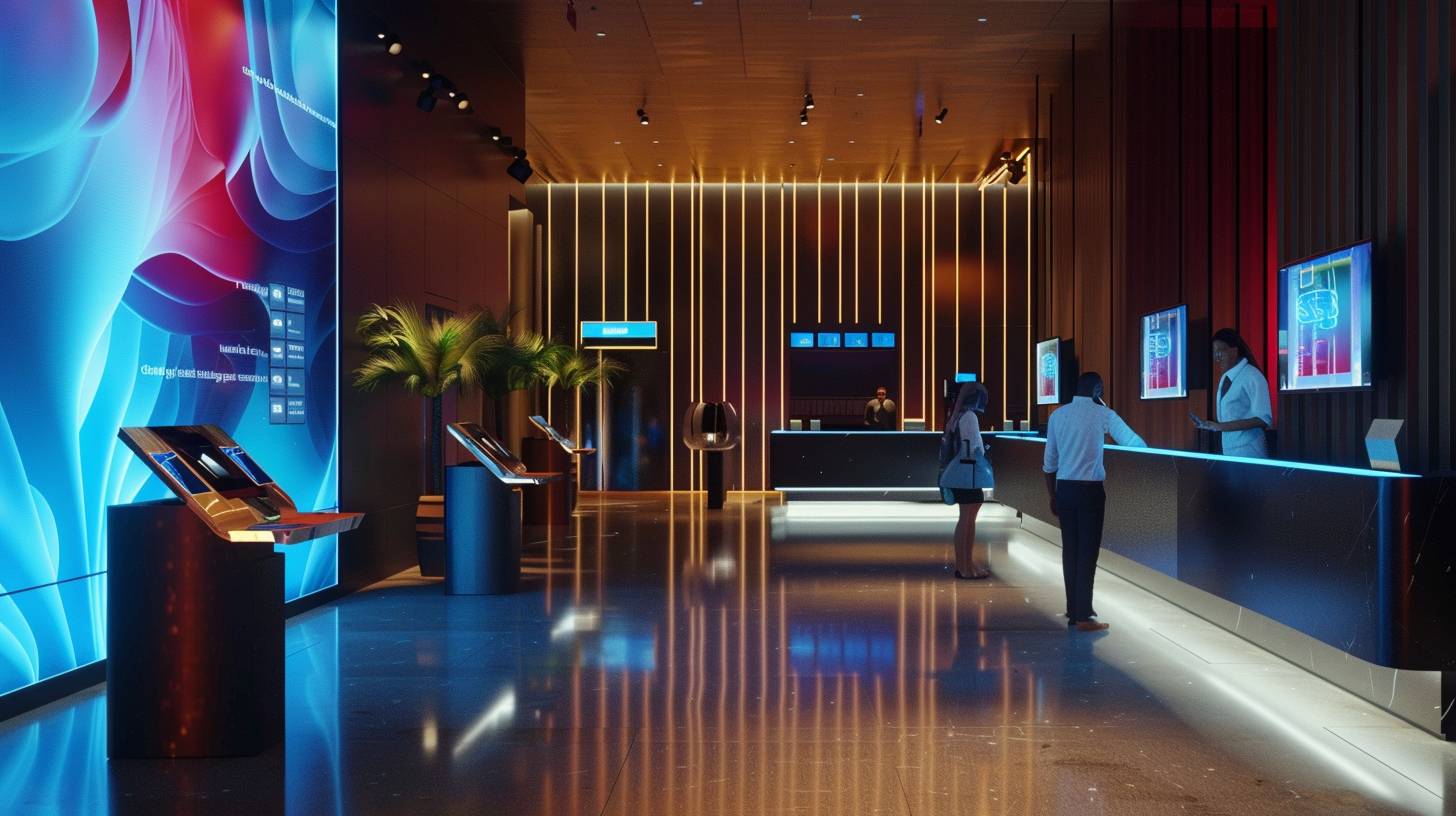
Checking in to the future
Checking in to the future
5 digital trends that are changing the hotel industry forever
Digitalisation in the hotel industry is doing way more than just improving Wi-Fi. Smart tech and connected services are shaping the future of hospitality – and giving hotels a chance to cut costs, automate processes, and reach new audiences. Investing in digital infrastructure now means getting a clear edge over the competition. Here are five digital trends that are super relevant right now.

1. Digital check-in – convenience for guests, efficiency for operators
The classic reception desk is increasingly being supplemented by digital solutions: more and more hotels are relying on digital check-in and check-out via app or terminal. Guests benefit from greater flexibility and shorter waiting times. At the same time, the hotel saves on human resources – a real advantage given the ongoing shortage of skilled workers. This requires a stable, secure and fast Internet connection – ideally via a business broadband solution.

2. Smart rooms and connected devices
From individually adjustable room climate to controlling lighting, curtains or entertainment via smartphone or voice assistant: smart rooms improve the guest experience and reduce energy consumption. For hotel operators, this means more efficient utilisation, transparent consumption data and the opportunity to dynamically integrate new services. The basis for this is a powerful network infrastructure with IoT-enabled components.

3. Personalisation through data analysis
Whether it's a preferred room type, favourite drink or desired check-out time – if you know your guests, you can address them specifically. Digital tools can be used to collect and evaluate data along the customer journey. This increases customer satisfaction and the likelihood of repeat bookings. Modern hotel CRM systems and cloud-based platforms make this possible – in compliance with GDPR, of course.

4. Digitally controlled operating processes
Behind the scenes, digital tools ensure greater efficiency: from automated room cleaning and digital shift schedules to cloud-based accounting. Many hotels now outsource their IT processes to specialised service providers – for example, as part of a managed service model. This ensures that IT remains up to date at all times without having to run an in-house department.

5. Hybrid usage concepts – flexible, digital, profitable
The boundaries between hotels, co-working spaces, clinics and apartments are becoming increasingly blurred. New concepts such as "hospitality-as-a-service" enable the use of real estate for different target groups – temporarily, scalably and digitally controlled. Robust and future-proof connectivity, for example via fibre optics, 5G or Ethernet, is crucial for such models – including service and operation by experienced partners such as Vodafone Business.
Conclusion: Digitalisation is not a trend – it is the new reality.
Hotels that go digital today not only create better guest experiences, but also secure their profitability in a highly competitive market. Whether smart infrastructure, managed services or IoT solutions – Vodafone Business offers the right technology and advice for future-oriented hotels.